I once paid eleven dollars for a jar labeled “wildflower” that tasted like nothing. Warm nothing. It sat in my pantry for a year out of spite.
That jar is why I started reading labels like a suspicious landlord. Texas sells a lot of honey, and a decent share of it is blended, heated, or sourced from places that have never seen a bluebonnet. You can avoid the wasted money with about ninety seconds of attention in the aisle. Where to buy raw honey in Texas gets a lot easier once you know the four signals that separate a real Texas jar from a pretty one.
Below is the exact process I use, plus the label language that should make you put a jar back on the shelf.
What does “local” actually mean on a honey label?
Short answer: almost nothing legally. The word isn’t tightly regulated for honey in the way you’d assume, and a jar can say “local” while the contents come from a blend of several countries. The label isn’t lying. It’s just using a word loosely.
What you want instead is a named origin you can verify. A city, a county, a specific apiary, a stated state. “Texas wildflower” is better than “wildflower.” “Belton, Texas” is better than “Texas.” When a producer puts a town on the jar, they’re sticking their neck out, and that’s the behavior worth rewarding.
Here’s the part most shoppers miss: the United States Department of Agriculture tracks honey production and imports at the national level, and the volume of imported honey on American shelves is genuinely large. That doesn’t make imports bad. It makes origin claims worth checking. If a bottle says local and the fine print lists a distributor in a state three time zones away, you have your answer.
The four signals I check before anything else
I call this the Jar Test, mostly because I needed a name to stop myself from buying on packaging alone. It takes less time than reading a cereal box.
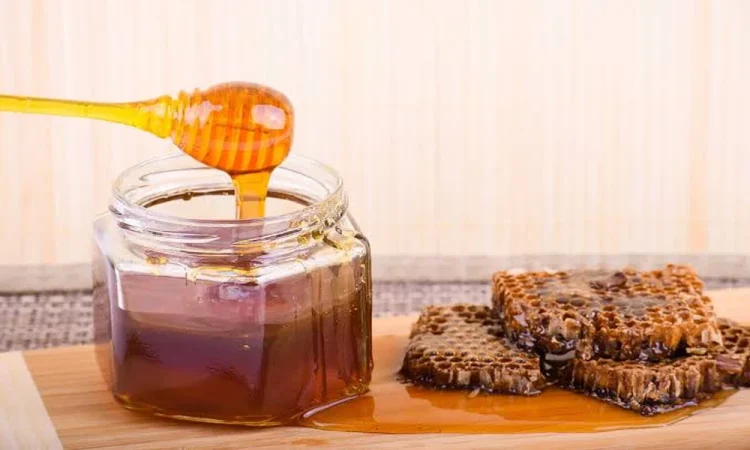
- Cloudiness or crystals. Raw honey crystallizes. It’s a physical property of unpasteurized honey with real pollen and glucose in it, not a flaw. A jar that’s slightly gritty or opaque is usually a better sign than one that pours like glass at every temperature.
- A town, not a slogan. Look for an actual place name tied to the producer, ideally on the front label or the small print on the back.
- The word “raw” used with specifics. Raw plus “unfiltered” or “unpasteurized” tells you something. Raw alone on a bottle with no other detail is decoration.
- A producer you can look up. The label should include enough of a name that you can find the company on your phone while standing in aisle two. If you can’t find them in thirty seconds, that’s information.
My strong opinion: signal one carries more weight than the other three combined. Thermal processing is the fastest way to strip the floral character out of honey, and crystallization is the visible evidence that it didn’t happen.
Why the same honey tastes different in two Texas towns
Bees forage within a few miles of the hive, which means the flavor of a jar is basically a report on local plant life. Clover in one county, mesquite and huajillo in another, something nearly herbal near the coast. Two producers forty miles apart can sell honeys that taste like different products.
That’s the actual argument for buying close to home, and it’s stronger than any wellness claim you’ll see on a label. You’re buying geography. The U.S. Census Bureau keeps the population and county data that makes this easy to picture: Texas is enormous and its growing regions are wildly different, so “Texas honey” is a category, not a flavor.
Practical version: buy two small jars from different parts of the state, taste them side by side on plain toast, and you’ll never go back to the generic bottle. I’ve done this three times now and the difference is not subtle.
A quick aisle checklist for the next grocery run
Standing in front of the shelf with a cart and a toddler is not the moment for deep research. Here’s what fits in the time you actually have.
- Flip the jar and read the back panel first. The front is marketing.
- Look for a town, a state, or an apiary name you can search.
- Accept crystals. Welcome them, even.
- Skip anything that lists multiple countries of origin if you’re specifically hunting local.
- Note the producer name in your phone so you can check their site when you get to the car.
One more thing worth knowing: Texas has a real agricultural infrastructure behind small food producers, and the Texas Department of Agriculture maintains programs that support them. Producers who go through that kind of process usually want you to know it, and it’s a reasonable tiebreaker between two jars that both look honest.
The two mistakes I see most often
Mistake one: assuming clear equals premium. Clear honey photographs beautifully and tells you almost nothing. If a jar is perfectly translucent and stays that way for two years on your counter, you’re probably looking at heat-treated honey with the pollen filtered out.
Mistake two: buying the biggest bottle. Bulk sizing rewards the producer with the longest shelf life, and long shelf life usually means processing. Buy small the first time. Taste it. Then go back for the big one from whoever earned it.
Neither mistake is catastrophic. Both cost you flavor, and flavor was the entire reason you picked up the jar.
What a good jar actually gets you
Freshness is the honest benefit here. Honey hauled through a short supply chain and bottled without heavy heat keeps the floral notes that make it worth eating off a spoon. It also gives you a producer with a name, a place, and a reason to keep their standards high.
That’s the whole game. You’re not hunting for a secret label or a magic phrase. You’re looking for a jar that names where it came from, hasn’t been cooked into blandness, and was made by someone whose business you can actually find. Ninety seconds in aisle two beats a year of resentful pantry storage, and I say that from experience.
Next time you’re standing there with two jars in your hands, flip both over, find the town, and buy the one that’s cloudy. Then tell me how it tasted, because I’m always looking for the next jar worth the drive.