Why evaluation precedes packaging?
Sealing a product locks in whatever condition it carries at the moment of closure, making pre-packaging assessment one of the most consequential stages in the production chain. thca flower reaching retail without a thorough review at this stage carries whatever inconsistencies slipped through earlier processing without further opportunity for correction before it reaches a buyer. Assessment here serves as the final checkpoint where physical condition, moisture content, trichome integrity, and laboratory verification align against production standards before the product moves into sealed distribution.
Each stage addresses a specific variable. Visual inspection identifies physical inconsistencies that handling may have introduced across the run. Moisture assessment confirms curing completed within acceptable parameters rather than leaving water activity at a level that compromises sealed preservation. Trichome condition review checks whether surface resin is held through trimming without significant loss. Laboratory verification confirms potency, terpene figures, and contaminant screening reflect current condition rather than earlier production estimates taken at a different handling stage.
How do visual checks work?
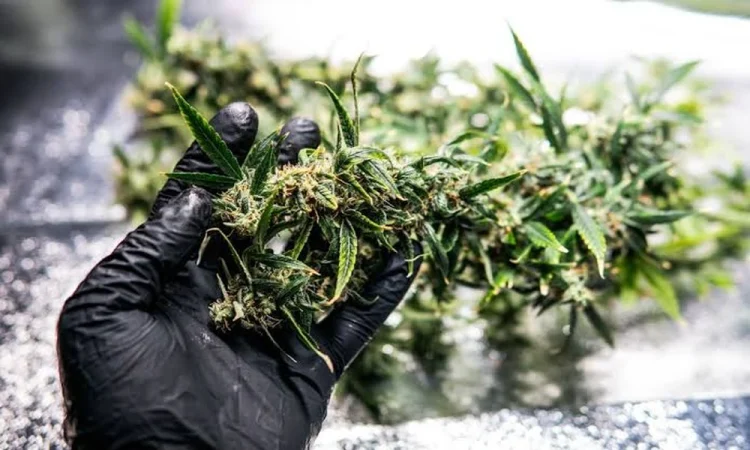
Visual inspection is the first assessment layer and covers physical characteristics, indicating whether the product meets a consistent standard across the full production run.
- Colour consistency – checking whether hue development is even across specimens or shows oxidation, uneven curing, or heat damage at any point across the surface.
- Trichome surface coverage – assessing whether resin distribution held through trimming and transfer without significant loss from mechanical contact.
- Structural integrity – confirming specimens hold form without excessive shedding, compression, or fragmentation introduced during processing.
- Foreign material presence – identifying stem fragments, leaf material, or debris that trimming did not fully remove from the run.
- Size consistency – reviewing whether specimens fall within a range reflecting uniform production rather than mixed harvest material packaged together.
Moisture content assessment
Moisture at this stage determines whether curing is completed within the range where long-term preservation holds after sealing. Material carrying moisture above the accepted threshold creates conditions favourable to mould development inside sealed containers. Material falling below has lost terpene content past the point where aromatic complexity holds through the distribution period.
- The accepted moisture range sits between 10 and 12 percent water activity in most production standards applied before sealing.
- Assessment at this stage allows runs outside that range to be returned for correction before closure locks in an unfavourable moisture state.
- Run-level moisture testing rather than spot sampling provides more reliable data across the full production quantity than single-specimen measurement alone.
Laboratory verification before sealing
Third-party laboratory verification is the final stage before closure. Certificate of analysis figures confirm THCA potency, total terpene percentage, and contaminant screening results against the specific run being sealed rather than a general product average covering multiple production runs.
Testing at this point, rather than earlier in production, captures the condition closest to what will actually sit inside the sealed distribution. Potency figures from testing conducted weeks before closure may not reflect what handling and storage did to the product between initial assessment and sealing. Contaminant screening at pre-packaging confirms the run remained within acceptable parameters through the full handling chain from harvest through final processing before distribution begins.
Pre-packaging assessment functions as the production chain’s final quality gate. Physical inspection, moisture review, and laboratory verification together confirm that what gets sealed reflects what cultivation and post-harvest handling built rather than what processing may have diminished along the way.