What Happened at the 1976 Bicentennial — and Can the 250th Anniversary Top It?

July 4, 1976, marked the 200th anniversary of the Declaration of Independence’s adoption. There were several events, festivities, and commemorations known as the Bicentennial Era. On the Fourth of July, the Smithsonian held a 12-week American Folklife Bicentennial Festival. It welcomed Queen Elizabeth II. And opened the National Air and Space Museum on the National Mall.
The celebrations are renowned for evoking sentiments of nostalgia and patriotism. After the turbulent decade that featured the Watergate scandal. Also, the Vietnam War and the Civil Rights Movement. There was a general sense that the nation was starting to recover. President Ford detailed the impact of the nation’s celebrations in his autobiography.
“Seldom in the world’s history have so many people spontaneously gathered to show their love for their homeland. There was not a single event that ruined our celebration. The wounds of the country have healed. We had established the groundwork for a generation that was sure to be full of optimism. This is by regaining our pride and rediscovering our faith.”
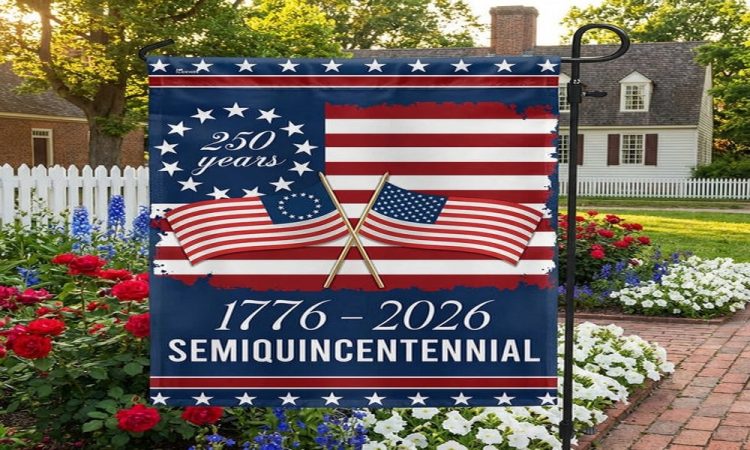
The United States Declaration of Independence will celebrate its 250th anniversary on the Semi Quincentennial. The Ultimate Flags will be all over the state. And fellow Americans will join this celebration on July 4, 2026.
What happened at the 1976 bicentennial?
The United States of America celebrated its bicentennial in 1976. Thus, marking 200 years since the Declaration of Independence was signed.
Americans came together in a joyous exhibition of national pride during the year-long commemoration. This was a burst of patriotism, solidarity, and introspection.
The celebrations were extensive and varied. It began with President Gerald Ford’s resounding approval of a time to pay tribute to history. And also, to motivate the future.
- They had fireworks, parades, historical reenactments, and concerts across the country.
- One of the highlights was the July 4th tall ship procession in New York Harbor. This attracted millions of participants and onlookers.
The harbor was crowded with magnificent sailing ships from all across the world. Thus, highlighting America’s long-standing maritime ties.
- The spirit of international solidarity that pervaded the festivities was embodied by this flotilla of goodwill. Numerous regional celebrations highlighted the varied fabric of American life. Also, cultural shows and exhibitions were ubiquitous.
- By highlighting the contributions of immigrants, Native Americans, and African Americans. These events ensured a more comprehensive perspective on the history of the country.
- Historical centers like Boston, the birthplace of the American Revolution. Click https://www.historyhit.com/causes-of-american-revolution/ to learn more.
- Philadelphia – it is where the Declaration was made official and hosted significant events.
- Another famous event was the Liberty Bell’s voyage throughout the nation. The bell, which represented freedom and solidarity, stopped in each of the 50 states. Thus, enabling Americans from all over the country to take part in the momentous occasion.
During the bell’s visit, communities came together to celebrate their part in the history of the country. They organize local festivities that embody their distinct cultural identities.
- A frenzy of commemorative goods and media also occurred during the Bicentennial. To preserve the essence of 1976 for future generations, unique coins, stamps, and mementos were created.
Documentaries and television shows explored the nation’s history. Therefore, providing instructive material that reminded viewers of their common experience.
The 250th Anniversary Celebration

The Semiquincentennial is also known as the Bisesquicentennial, Sestercentennial, or Quarter Millennial. According to Andy Horowitz, the state historian for Connecticut. Those commemorations today reveal more about the chaotic 1970s and 1770s. As a member of the Connecticut Semiquincentennial Commission. This is organizing several activities that will take place on July 4, 2026.
He states that the 250th will be much less regarding 1776 than it would be about 2026. Rather than taking Americans back 250 years. It will come in the setting of current cultural, political, ideological, and historical concerns.
A task committee has been announced by President Trump. They will organize an extraordinary event for America’s 250th Independence Day. In 2026, the task committee will be in charge of planning national celebrations to mark the momentous occasion.
In an effort to unite Americans in a spectacular show of patriotism. The President stressed the value of patriotism and unity during the festivities. To guarantee an unforgettable and inclusive celebration – read this for more info. The task force will collaborate closely with local governments, communities, and cultural institutions.
Conclusion
The Bicentennial was far more than a party when one considers this enormous event. It served as a moving reminder of America’s beginnings.
It is a chance to consider the challenges and victories that molded the country. And a motivation to face the upcoming century with optimism and resolve. It is still a monument to the continuing spirit of American unity and patriotism. Even as the memories of 1976 stay to reverberate.
Looking back, we can see the boundaries of the bicentennial’s vision for inclusivity, but we can also see that, in reaction to the manners that the happenings of the 20th century had completely changed many people’s conceptions of what it meant to be American, people were attempting to present a new image of 18th-century America.