

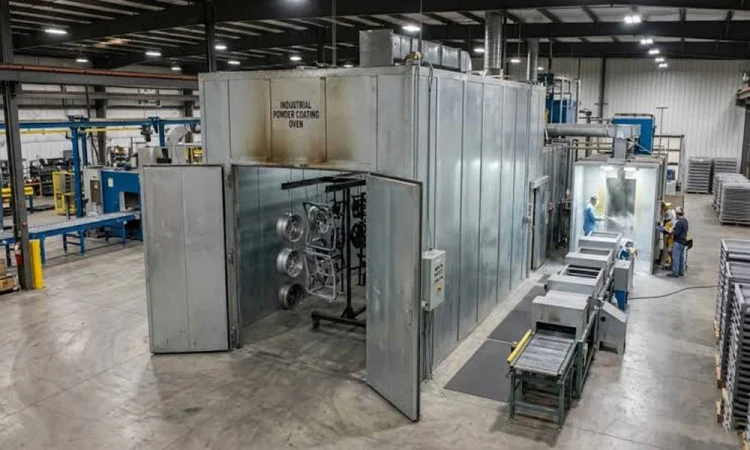
Industrial finishing operations frequently struggle with inconsistent paint adhesion because baking powder requires far more discipline than simply flipping a heater switch. Success hinges on mastering invisible physical forces like thermal conductivity, molecular melt phases, and convective airflow patterns inside the chamber. Overlooking these delicate operational mechanics ruins expensive workpieces, wastes shop fuel, and forces teams into frustrating cycles of abrasive stripping.
Ramp Rates and Heat-Up Speed: Getting Metal to Temperature Safely
Heating cold metal too quickly traps outgassing vapors beneath the melting paint, puncturing smooth films with tiny pinholes and unsightly blisters. Conversely, sluggish thermal rises allow partially liquefied resins to puddle unevenly, creating severe orange peel textures across vertical surfaces. Well-designed powder coating ovens solve this dilemma by graduating burner output through staging cycles that match specific sheet thicknesses. Balanced energy delivery ensures resins melt, flow, and level out uniformly before crosslinking begins to lock the polymer structure in place. Precise modulation keeps delicate corners and thick structural plates climbing together along a controlled curve without shocking the raw substrate.
How Peak Metal Temperature Overrides Basic Air Temperature Settings
Wall-mounted temperature dials only report the heat of passing air currents rather than the internal energy of loaded workpieces. Massive steel tubing absorbs immense thermal energy, lagging behind ambient air by upwards of fifteen minutes during heavy batch cycles. A Reliant industrial powder coating oven compensates for this stubborn thermal lag by driving intense air circulation directly past dense part profiles. Counting dwell time against ambient air readings instead of verified metal skin values produces deceptively shiny coats that snap under mechanical strain.
Attaching magnetic data loggers directly onto structural joints reveals the exact moment cold iron reaches chemical activation thresholds. Technicians running modern Reliant powder curing ovens adjust burner setpoints based on recorded part profiles instead of factory default estimates. Grounding daily bake routines in actual substrate data shields manufacturing lines against adhesion failures and expensive customer returns. Consistent heat saturation transforms brittle powder polymers into pliable shields capable of surviving harsh impact and outdoor corrosion.
Dwell Time Calculations: When Does the True Cure Clock Actually Start?
Starting an egg timer the second oven doors latch shut remains the most common production blunder across commercial paint lines. Chemical data sheets specify cure windows based strictly on minutes spent at target metal heat, completely discounting earlier warmup phases. Advanced Reliant powder coating systems eliminate human timing errors through smart PLC interfaces that delay dwell clocks until parts reach specified heat. Pulling hanging racks five minutes early leaves interior resin bonds weak and porous, drastically reducing corrosion protection. Proper soak periods guarantee that full molecular crosslinking completes across the entire product geometry before parts meet ambient shop air.
Managing Convection Airflow Velocity Without Blowing Powder Off Parts
Moving high volumes of heated air remains the fastest mechanism for transferring calories into cold industrial hardware. Excessive turbulence, however, strips electrostatically charged powder right off grounded metal corners before melt phases solidify the coating. Custom ducting in Reliant powder coating ovens diffuses forced air into wide, steady laminar streams that wash across parts without disturbing dry pigment. Gentle air currents protect intricate detailing, deep Faraday cage recesses, and sharp edges from bald patches caused by aggressive blast nozzles.
Operators utilizing engineered Reliant powder coating equipment fine-tune variable frequency drives to balance static pressure across the entire enclosure. Correct static air distribution wipes away stagnant cold blankets that tend to settle around floor-level cart framing. Eliminating dead air pockets keeps top and bottom hanger rails curing at identical speeds throughout the workday. Stable airflow also minimizes cross-contamination by keeping trace airborne lint from settling into fluidizing resin pools.
Why Controlled Cool-Down Curves Prevent Thermal Shock in Heavy Metal
Rolling piping-hot structural weldments straight into cold winter shop drafts creates sudden thermal contraction that micro-fractures fresh topcoats. Rapid chilling locks internal stress into thick castings, causing brittle finishes to craze or lose their intended specular gloss levels. Fabricators seeking a Reliant powder coating oven for sale often prioritize vestibule staging chambers or insulated doors to tame post-bake cooling rates. Tapering component temperatures inside sheltered staging bays allows polymer lattices to settle into their final crystalline geometry smoothly. Shielding hot assemblies from sudden temperature drops protects paint elasticity and ensures maximum impact resistance during transport.
Exhaust Cycling and Air Purge Rates for Volatile Management
Thermal crosslinking releases minute volumes of moisture, degassing agents, and volatile organic byproducts into the sealed chamber atmosphere. Trapped chemical fumes deposit microscopic yellow haze or greasy residues over curing panels if exhaust blowers fail to cycle fresh air. Businesses evaluating Reliant powder coating equipment for sale inspect automated purge dampers that evacuate volatile concentrations without dumping valuable heat. Timed exhaust routines flush heavy smoke layers out roof stacks while pulling in just enough conditioned makeup air to satisfy combustion requirements.
National fire safety standards mandate strict four-volume fresh air pre-purges before burner igniters can spark to life. Meeting these life-safety exhaust thresholds safeguards factory facilities from explosive vapor accumulations during high-volume production cycles. Clean exhaust flow patterns also preserve reflective interior box walls, maintaining radiant efficiency across thousands of operational hours. Maintaining balanced stack ventilation protects both finished product clarity and plant air quality across eight-hour shifts.
How Do Mixed Part Masses Shift Your Target Cycle Profiles?
Hanging thin sixteen-gauge sheet metal brackets beside heavy three-quarter-inch mounting plates creates conflicting thermal absorption rates within a single batch. Lightweight stampings reach four hundred degrees within minutes, risking overbake discoloration while dense structural pieces remain cold and undercured. Smart production scheduling groups components by cross-sectional thickness, or uses variable burner staging to buffer mixed rack arrangements. Purchasing an integrated Reliant powder coating equipment package helps busy job shops manage these complex loading variables with programmable recipe controllers and optimized chamber layouts. Metalworking facilities seeking to master curing cycles, calibrate heat schedules, or configure custom thermal lines can partner with Reliant Finishing Systems to engineer dependable curing solutions tailored to their exact workload demands.


