Climate-related effects on waterbodies, which include drought and extra rain, threaten pond health. Gardeners and wildlife lovers have to actively change ponds for ecological balance and biodiversity and for aquatic life in unpredictable climatic conditions.
Selecting the right filtration system is an effective way to encourage a resilient pond environment. Evolution Aqua Pond filters are famous for their efficiency and maintaining the clarity and purity of water. Such filters placed, especially when teamed up with quality team like That Pond Guy will ensure your pond will not leak and will be less stressed in the environmental conditions.
These systems are, of course, used to control debris and excess nutrients, preventing algae blooms and oxygen depletion amid spells of warm weathering and heavy rains. Developing an environment for healthy aquatic life that can tolerate climate variances is necessary for long-term pond sustainability.
Seasons of heat and dryness present the ponds with the problem of increasing water temperature and oxygen levels. To ease your pond into its new environment, install water lilies and other plants that offer shade and keep temperatures down.
Also, applying a makeshift shade cover is sensible to prevent dangerous UV rays from stressing your pond ecosystem. By adding a water function such as a fountain, which guarantees that the water is shifting and bubbling, numerous aeration methods facilitate natural oxygen through diffusion, which is crucial for fish and aquatic existence.
During these periods, reducing fish feed decreases waste production further, thus avoiding excess nutrients that will cause algae overgrowth. Providing a deep pond with a cold-water bottom layer saves another buffer against heat stress.
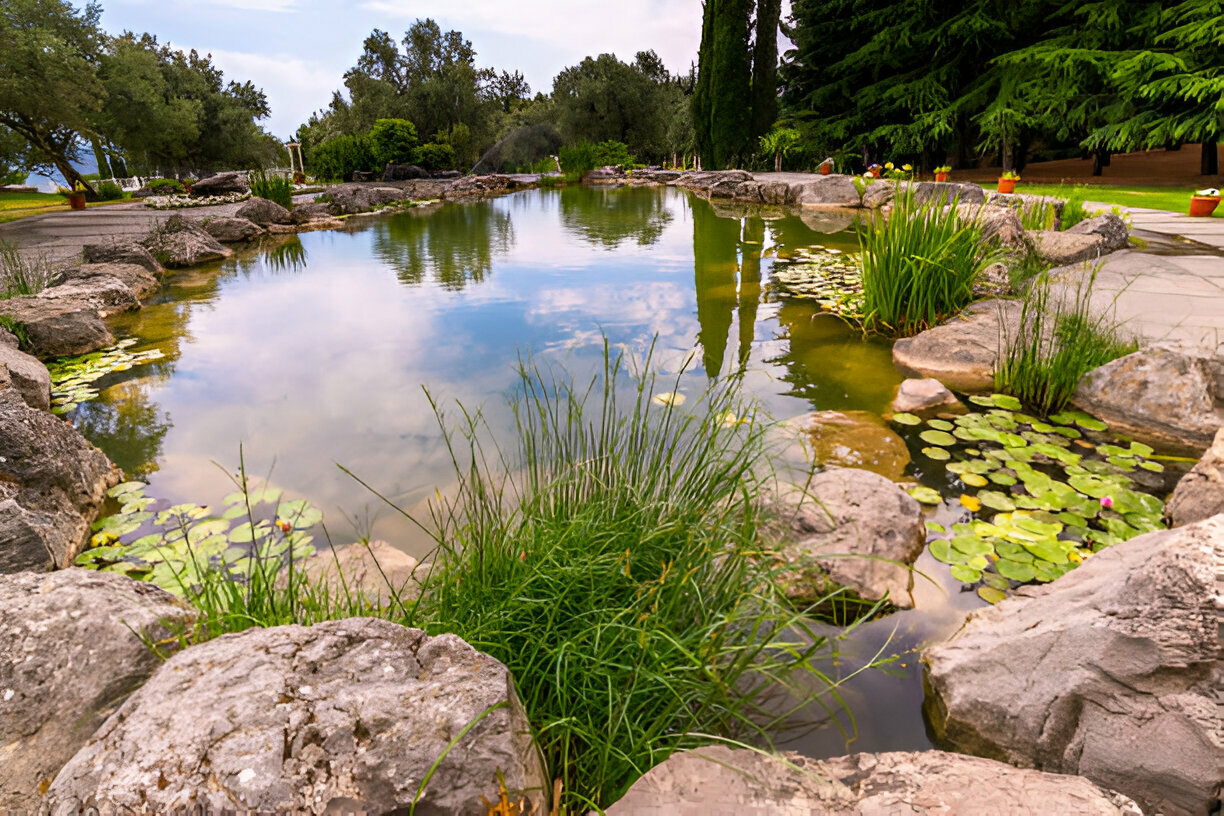
Heavy rain is also problematic in that it can overflow ponds or leach away precious nutrients. To be better prepared regarding runoff, it is essential to reduce the number of surfaces causing such runoff by planting native plants with big root systems that absorb excess water. Putting gravel along the pond’s border will help with drainage, whereas levelling off the garden can prevent overflow.
Keeping the pond from accumulating rainwater and supporting the whole ecosystem with such wildlife is important. During storms, clearing fragments and debris particles stops the aging/decomposition procedure and furthers water pollution; hence, a purifier and healthier habitat develops.
Lastly, creating a flora and fauna-friendly pond is a superb way to mitigate the poor impact of climate changes on the local species. Ponds offer needed habitats for birds, bugs, and amphibians as food, refuge, and breeding locations.
Nectar-rich ornamental flowers like lavender, buddleia, and marigolds are the abode for pollinators, even as timbers are preferable to bees and nectar producers. An expert like That Pond Guy, who is experienced in pond protection and healing, can help you implement high-quality practices for environmental resilience.
Summary
Adapting your pond for global climate change involves strategic planning, the right filtration, careful water control, and habitat enhancement. Such measures ensure pond longevity, wildlife, and climate action. Through their use, you establish an active, resistant ecological refuge that encourages healthy pond ecosystems in spite of the challenges of changing climate.